ACADEMY OF DENTAL MATERIALS

WEBINARS
The ADM proudly presents
2026 Webinar and Live Q & A
Wednesday, September 2, 2026
11:00 am (PDT) / 1:00 pm (CDT) /3:00 pm (BRT)
>>REGISTER TODAY!
(Webinar to be held on Zoom and will last about an hour and a half.)
Bridging Laboratory Research and Clinical Failures in the Era of AI
Presenter:
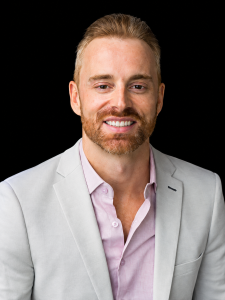
Rafael R. Moraes
Professor, School of Dentistry, Universidade Federal de Pelotas, Brazil
Abstract:
Clinical failures in restorative dentistry rarely arise from a single material property. This is particularly evident in resin composite restorations, where degradation, fatigue, biofilm, adhesive interfaces, operator-dependent factors, and patient-related conditions interact over time. Using resin composite restorations as a guiding example, this talk will discuss how laboratory studies in dental materials can better reflect clinically relevant failure patterns, moving beyond isolated outcomes toward experimental designs that incorporate aging, degradation, interface behavior, and oral-environment complexity. The presentation will also consider how artificial intelligence may assist this process and support more clinically meaningful experimental planning. The goal is to strengthen the bridge between elegant laboratory testing and real clinical problems.
Biography:
Rafael R. Moraes is a Professor and researcher at the School of Dentistry, Universidade Federal de Pelotas, Brazil. His research focuses on dental materials, restorative dentistry, and resin composites, with an emphasis on generating evidence from both clinical and laboratory studies. He has published more than 250 peer-reviewed papers, which have received over 13,000 citations. More recently, he has also been studying artificial intelligence, with particular interest in its practical use by students and researchers, as well as its impact on education, scientific practice, and the emerging culture of AI use in academia.
Panelists:
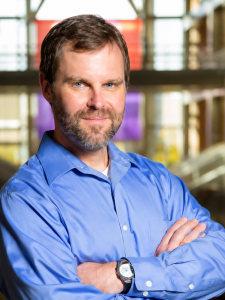
Bradley D. Craig
Senior Product Development Specialist | Solventum Dental Solutions
Dr. Brad Craig comes to us with over 28 years of product development experience with Solventum Dental Solutions (previously 3M Oral Care Solutions). He also interned briefly with Dow Chemical and Sandia National Laboratories prior to joining 3M and more recently transitioning to Solventum. He holds a Ph.D. from the University of Minnesota in Materials Science & Engineering (1997), and a B.S. in Chemical Engineering from the University of Nebraska (1993). He is a named inventor on approximately 60 US patent families and over 300 international patent applications. He has been an invited speaker at both US and international locations throughout his career, having given over 100 invited lectures across five different continents. He also has over 50 publications to his credit. Brad has worked on the development of numerous restorative dental materials throughout his time with 3M and Solventum, ranging from universal composites such as FiltekTM Supreme Ultra Universal restorative and Filtek™ Universal, to dental adhesives such as Adper TM Single Bond Plus, to resin modified glass ionomer materials such as Ketac TM Nano, and on a new class of bulk filling materials in Filtek™ One. His products are in billions of teeth in the world today. He is currently a senior division scientist, and has worked extensively in nanotechnology, surface chemistries, composites, dental filler technologies, particle processing, hard tissue adhesives and glass ionomer materials. He is also a member of 3M’s prestigious Carlton Society, which is 3M’s hall of fame for scientists. In his personal life, Brad is an avid home brewer, mead maker and fisherman, occasional carpenter and woodworker, sometimes golfer, happily married, and the father of 2 children.
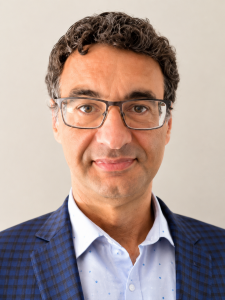
Faleh Tamimi
Professor, Associate Dean of Research and Graduate Education, Qatar University
Professor Tamimi’s translational research program is focused both on understating fundamental problems concerning health and disease in the oral cavity, and developing new technologies (i.e. biomaterials, drugs, AI) to manage pathologies of these tissues (e.g. bone fractures, osteoporosis, oral cancer).
Professor Tamimi, holds a BDS degree from the University of Jordan and 2 clinical certificates, in Geriatric Dentistry, and in Implant-Prosthodontics, respectively, as well as a Ph.D. in Biomaterials from the University Complutense of Madrid. He also received postdoctoral research training at McGill University.
He is a tenured Professor, and has held numerous leadership positions at McGill and abroad. Dr Tamimi has received ample recognitions and awards such as the VitalDent Foundation award, the Harry Rosen Award, the ACFD W.W. Wood Excellence in Dental Education Award, a Canada Research Chair Tier 2, and the Outstanding Research in Health Award form Qatar University. He has received the award of Alumni of the month from the University of Jordan in 2019 and in 2024 he received the title of Honorary Professors from the same university.
He has received research funding from many prestigious organizations such as CIHR, QRDI, NSERC, CFI, and has published over 240 peer-reviewed scientific articles, many of which are in high-impact journals.
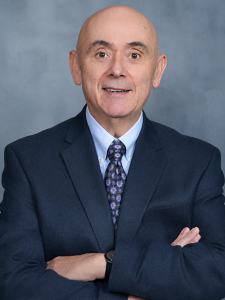
Jorge Perdigão
Professor in the Division of Operative Dentistry, Department of Restorative Sciences, at the University of Minnesota.
Jorge Perdigão DMD, MS, PhD, is a Full Professor in the Division of Operative Dentistry, Department of Restorative Sciences, at the University of Minnesota. Dr. Perdigão earned a DMD degree from the University of Lisbon, Portugal, in 1985. He subsequently earned an MS and a Certificate in Operative Dentistry from the University of Iowa, and a PhD in Dental Materials from the Catholic University of Leuven, Belgium. He has worked at the University of Minnesota for 27 years.
Dr. Perdigão has served as a Consultant to the American Dental Association Council on Scientific Affairs and to the Food and Drug Administration on Whitening Materials. He is a past member of the American Association for Dental Research (AADR) Fellowships Committee and the International Association for Dental Research (IADR) Publications Committee.
Dr. Perdigão serves on the editorial boards for the American Journal of Dentistry, Journal of Adhesive Dentistry, Journal of Biomedical Materials Research Part B, Journal of Functional Biomaterials, and Pediatric Dentistry. Dr. Perdigão has published over 220 articles in peer-reviewed journals, as well as several books and book chapters.
2026 Webinar and Live Q & A
11:00 am (PDT) / 1:00 pm (CDT) /3:00 pm (BRT)
Bridging Laboratory Research and Clinical Failures in the Era of AI
Professor, School of Dentistry, Universidade Federal de Pelotas, Brazil
Clinical failures in restorative dentistry rarely arise from a single material property. This is particularly evident in resin composite restorations, where degradation, fatigue, biofilm, adhesive interfaces, operator-dependent factors, and patient-related conditions interact over time. Using resin composite restorations as a guiding example, this talk will discuss how laboratory studies in dental materials can better reflect clinically relevant failure patterns, moving beyond isolated outcomes toward experimental designs that incorporate aging, degradation, interface behavior, and oral-environment complexity. The presentation will also consider how artificial intelligence may assist this process and support more clinically meaningful experimental planning. The goal is to strengthen the bridge between elegant laboratory testing and real clinical problems.
Rafael R. Moraes is a Professor and researcher at the School of Dentistry, Universidade Federal de Pelotas, Brazil. His research focuses on dental materials, restorative dentistry, and resin composites, with an emphasis on generating evidence from both clinical and laboratory studies. He has published more than 250 peer-reviewed papers, which have received over 13,000 citations. More recently, he has also been studying artificial intelligence, with particular interest in its practical use by students and researchers, as well as its impact on education, scientific practice, and the emerging culture of AI use in academia.
Panelists:
Senior Product Development Specialist | Solventum Dental Solutions
Professor, Associate Dean of Research and Graduate Education, Qatar University
Professor in the Division of Operative Dentistry, Department of Restorative Sciences, at the University of Minnesota.
>>>Login to your ADM membership page to view the recorded webinars.
Want to become member? Click “Join or Renew” below for more information, including fees and how to sign up.